主演:Neil Elias Abdelwahab,Hassan Mahbouba,罗丝-玛丽·佩罗特
导演:菲利普·法拉多
更新:2026-04-06 18:03:29
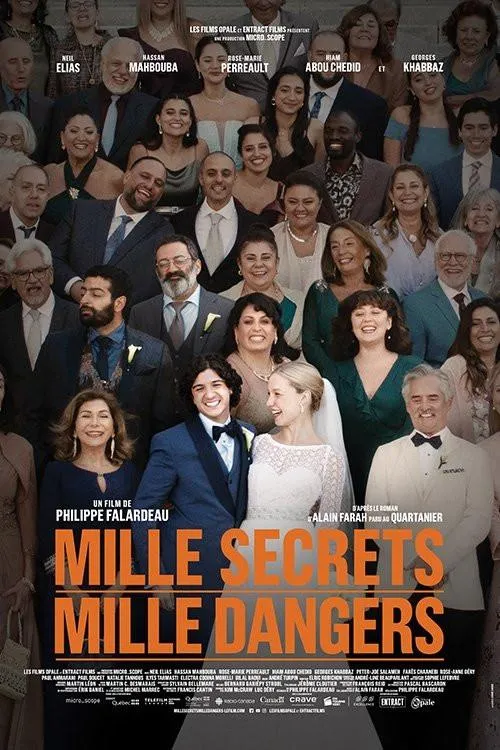
Alain marries Virginie in the crypt of the Saint-Joseph du Mont-Royal Oratory, a place steeped in quiet grandeur where sunlight filters through narrow windows to gild the stone walls. The air hums with anticipation; it feels as if this day will wrap around them like a warm blanket, promising to be the happiest day of their lives—and perhaps the happiest day of everyone’s, too. Everyone is there: Virginie’s parents, their faces alight with pride despite the years of gentle worry that etched lines on their brows; the great friend, the one who’s known Alain since childhood and who presses a trembling tissue into Virginie’s hand before the ceremony begins; the narrator’s parents, though their presence hangs in the air like a half-remembered song. The narrator, Lebanese by birth and raised in Egypt, immigrated to Quebec thirty years ago, divorced for twenty, and these two—his mother and father—have not spoken to each other for ten. Their silence lingers in the crypt, a silent witness to the celebration unfolding before them, like a storm cloud hovering just beyond the horizon.The ceremony proceeds with the measured grace of a hymn, each word spoken in a language that feels both ancient and new, as if the crypt itself is breathing life into vows that will bind two souls forever. Alain stands at the altar, his hands steady despite the nerves that clench his chest, and when Virginie appears, her dress trailing like a wave of white silk, his breath catches. For a moment, he forgets the weight of the world—the years of searching, the quiet doubts that had haunted him before this moment—and all he can see is the woman he loves, her eyes shining with the kind of light that only comes from a heart fully alive. The parents of the bride smile through tears, and the great friend, ever the optimist, whispers, “Finally,” into the narrator’s ear, though the narrator’s own gaze drifts to his parents, their figures rigid against the stone, a reminder that even joy has its shadows.As the officiant pronounces them husband and wife, the church bells ring out, echoing through the crypt and beyond, a sound that feels like a benediction. The guests clap, and Virginie turns to Alain, her smile a promise of forever. But beneath the surface of this perfect moment, the narrator notices something: a flicker of unease in his mother’s eyes, a tightness in his father’s jaw that suggests the silence between them is not just a pause, but a chasm that might yet yawn open. For the narrator, who has spent years straddling two worlds—Egyptian and Quebecois, Lebanese and Canadian, a son without a family and a man in search of belonging—this wedding is more than a celebration of love. It is a bridge, a bridge between past and present, between the dreams of a boy and the reality of a man. And yet, as he watches his parents, he wonders if bridges are ever truly strong enough to span the distances that time and silence create.The reception that follows is a swirl of laughter and music, of toasts and embraces, but the narrator remains on the periphery, his mind drifting back to the crypt, to the way his parents’ silence seemed to grow louder with each passing hour. He thinks of how they had divorced when he was a teenager, how his mother had packed their bags and left for Quebec, and his father had stayed behind, their paths diverging like rivers that once flowed together but now run in separate directions. Ten years of silence, he realizes, is a long time, and he wonders if this wedding—this day of such joy—will be enough to mend the cracks in their relationship, or if the distance between them will only grow wider, like the gap between two stars that can never meet.But for now, the moment is alive, and Alain and Virginie are at the center of it, their hands clasped, their hearts beating as one. The great friend raises his glass, and the room erupts in cheers, and the narrator, too, finds himself smiling, his eyes wet with a mix of happiness and sorrow. He knows that love can heal, that family is not just blood but choice, and that sometimes, even the longest silences can be broken by a single, heartfelt word. As the music swells and the guests dance, the narrator’s gaze drifts once more to his parents, and for a fleeting instant, he thinks he sees a crack in the stone wall of their silence—a glimmer of hope that perhaps, just perhaps, this day will be the beginning of something new, something unbroken, something that will bind not just two people in marriage, but three generations, three hearts, and three stories, all coming together in a single, beautiful, imperfect moment. And in that moment, the crypt feels less like a tomb and more like a cradle, holding the promise of a future where even the quietest voices can be heard, and even the longest silences can be turned into songs of reconciliation.